
ECOLOGICAL ARBORICULTURE · TASMANIA
Wildlife Habitat Creation in Hobart & Tasmania
Specialist tree habitat creation. Artificial wildlife hollows. Ecological arboriculture.
Trees provide far more than shade and greenery. Mature trees, deadwood and natural hollows are important habitat features for a wide range of native wildlife.
At Hobart Tree Service, we offer specialist habitat creation and tree management services designed to help retain and enhance the ecological value of trees.
Using techniques including Hollow Hog artificial hollow creation, habitat tree retention and specialist pruning, we can introduce habitat features into suitable trees and incorporate habitat retention into existing tree management projects.
From private properties to conservation and land-management projects, our approach combines practical arboricultural experience with an understanding of the value of established trees.
Why Tree Hollows Matter
Natural tree hollows provide shelter, nesting and breeding opportunities for many Australian birds and mammals.
However, suitable hollows can take many decades, and sometimes centuries, to develop within mature trees.
As older trees are lost through clearing, development and natural decline, the availability of these important habitat features can become limited.
Retaining existing hollow-bearing trees remains a priority wherever it is appropriate and safe to do so.
In suitable circumstances, artificial hollows and other habitat features can provide an additional management option, particularly where natural hollows are scarce.
Our habitat creation work aims to complement the retention of existing natural habitat rather than replace it.
-
Artificial Wildlife Hollows
Creating purpose-designed cavities in suitable trees.
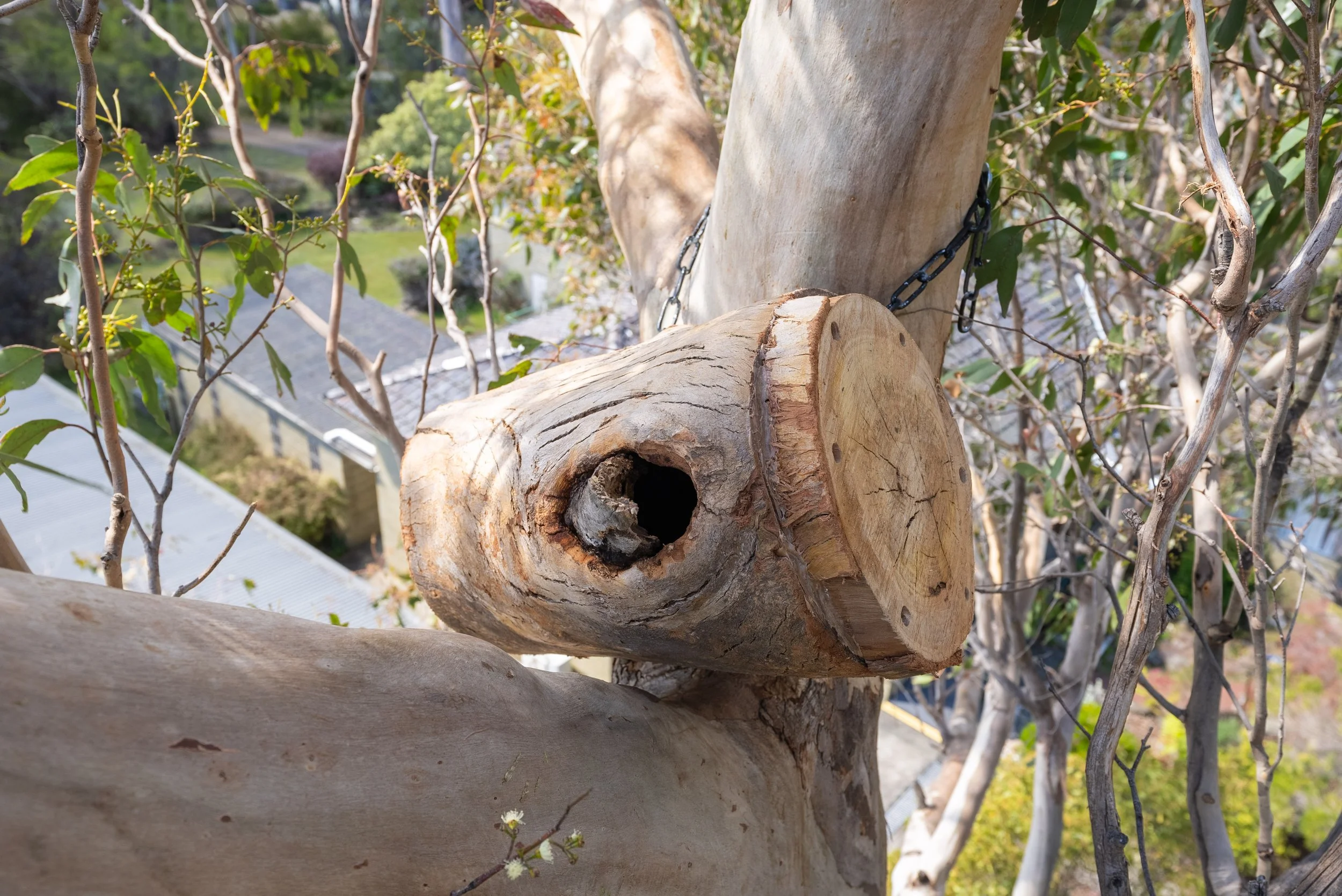
We use specialist carving techniques to create artificial hollows within living or dead trees.
Hollow dimensions, entrance size, position and orientation can be considered according to the intended habitat objectives and the characteristics of the host tree.
Every project starts with selecting an appropriate tree and determining whether artificial hollow creation is suitable.
-
Hollow Hog Habitat Creation
Specialist equipment for controlled hollow carving.
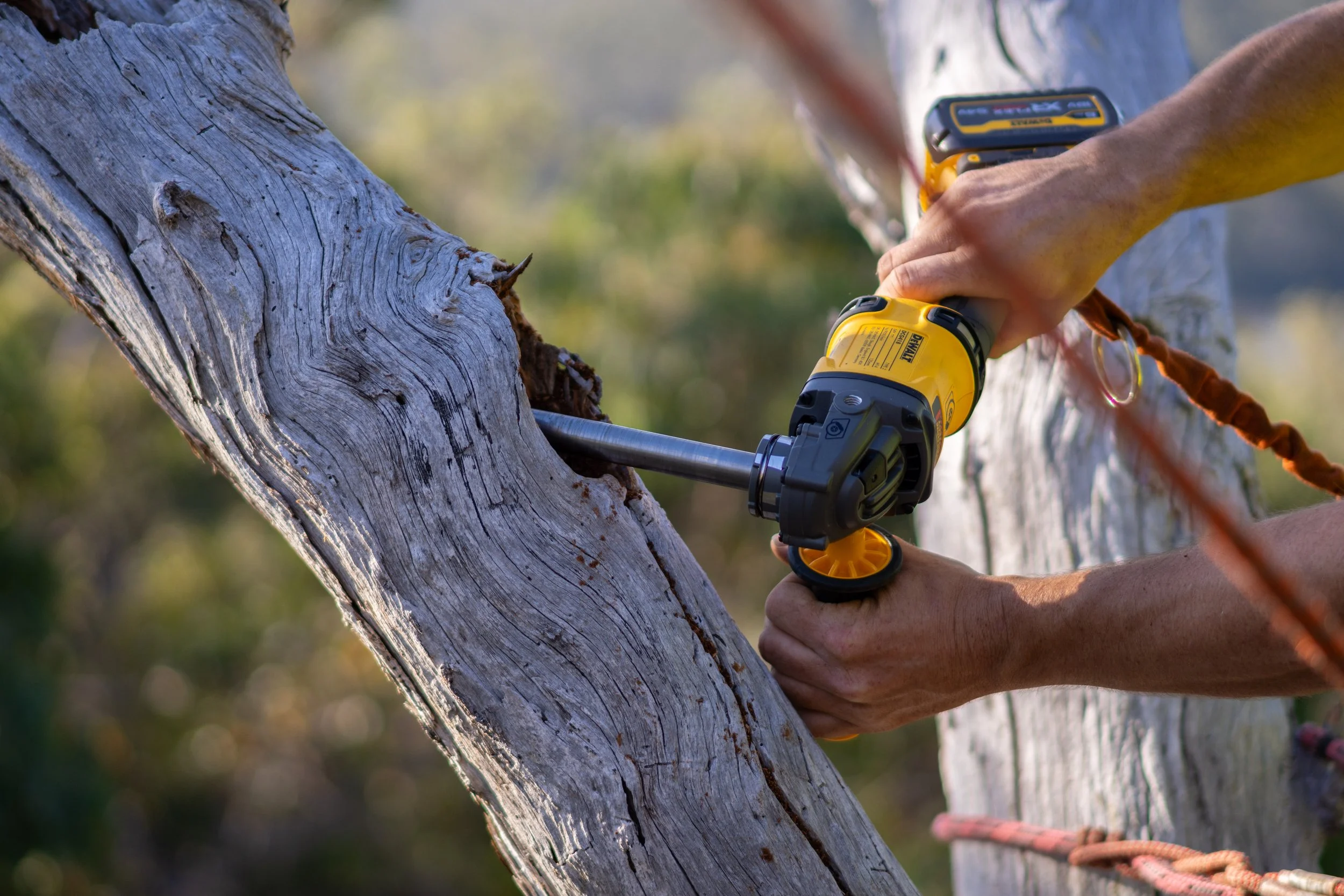
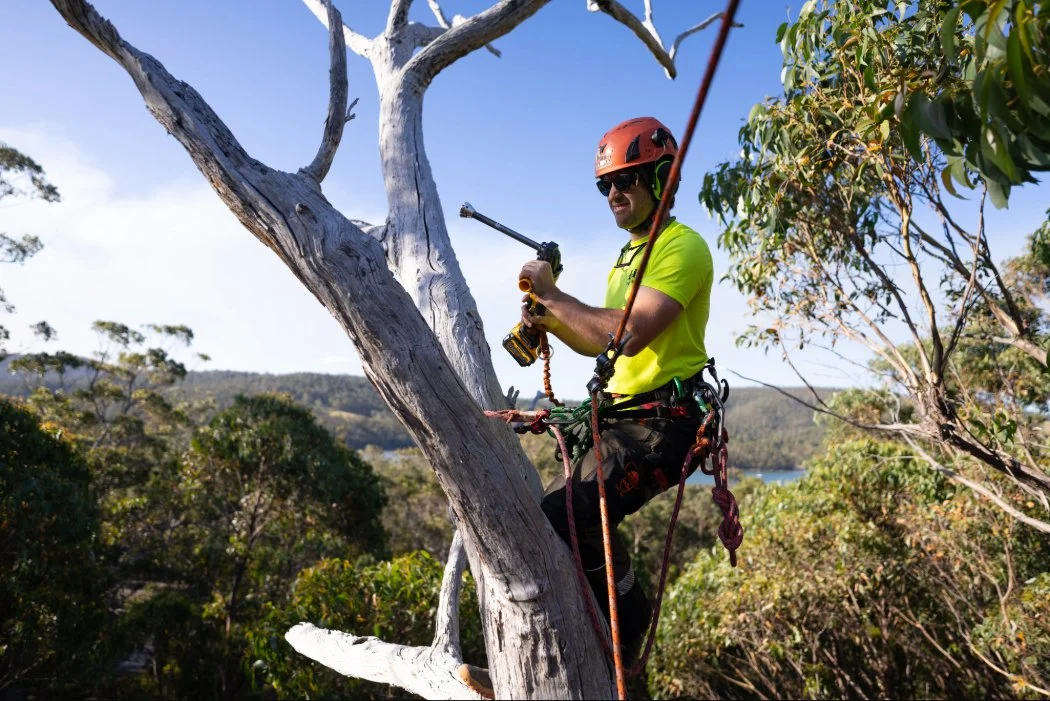
The Hollow Hog is a purpose-built tool that allows an arborist to create an internal cavity within a tree through a relatively small entrance.
This provides flexibility in designing the cavity and locating it within suitable trunks and branches.
We use the Hollow Hog as part of a considered habitat creation process that takes account of tree condition, cavity dimensions and the surrounding environment.
-
Habitat Tree Retention
Retaining valuable habitat when complete removal isn't necessary.
Dead, declining and structurally compromised trees can still provide important habitat.
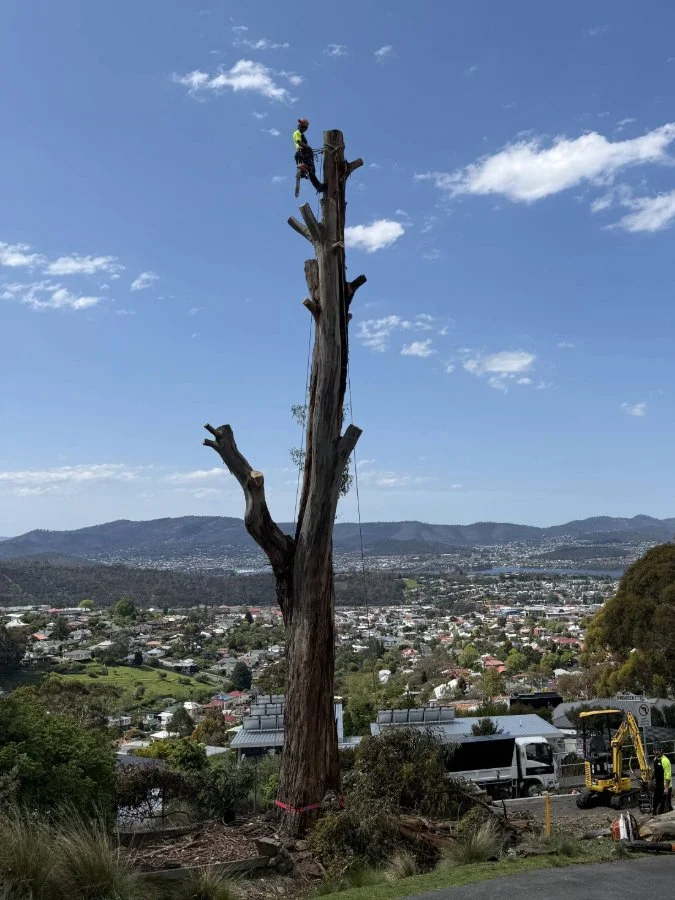
Where the site and tree condition permit, it may be possible to reduce a tree to an appropriate height and retain the remaining trunk as a habitat structure.
Artificial hollows and other habitat features can then be incorporated into the retained tree where suitable.
This provides an alternative to complete removal for some properties, parks and conservation areas.
Natural tree hollows generally form through processes such as branch failure, decay and the gradual deterioration of wood.
The Hollow Hog allows us to create a cavity within suitable timber using a specialist carving tool.
Rather than requiring a large external opening, the tool can form an enlarged internal space through a smaller entrance.
However, successful habitat creation involves more than choosing the right tool.
We consider the species, size, structure and condition of the tree, along with the proposed cavity's dimensions, position, drainage and potential exposure to the weather.
Where a project is designed around particular wildlife, the intended species or group of species should inform the design.
Artificial hollows are an emerging habitat management technique. Their effectiveness depends on the installation and surrounding habitat, and occupancy by wildlife cannot be guaranteed.
Creating Artificial Hollows With the Hollow Hog
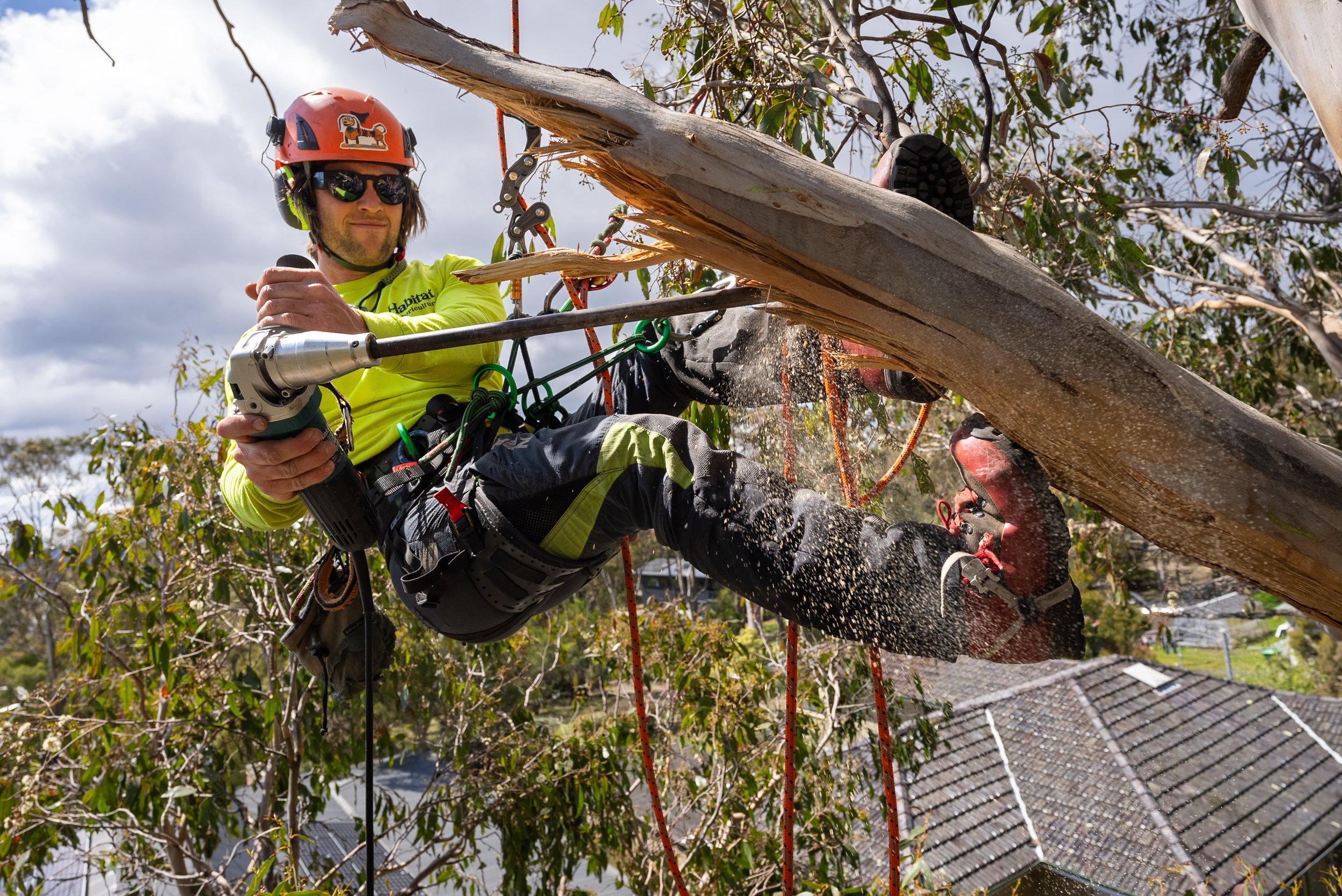
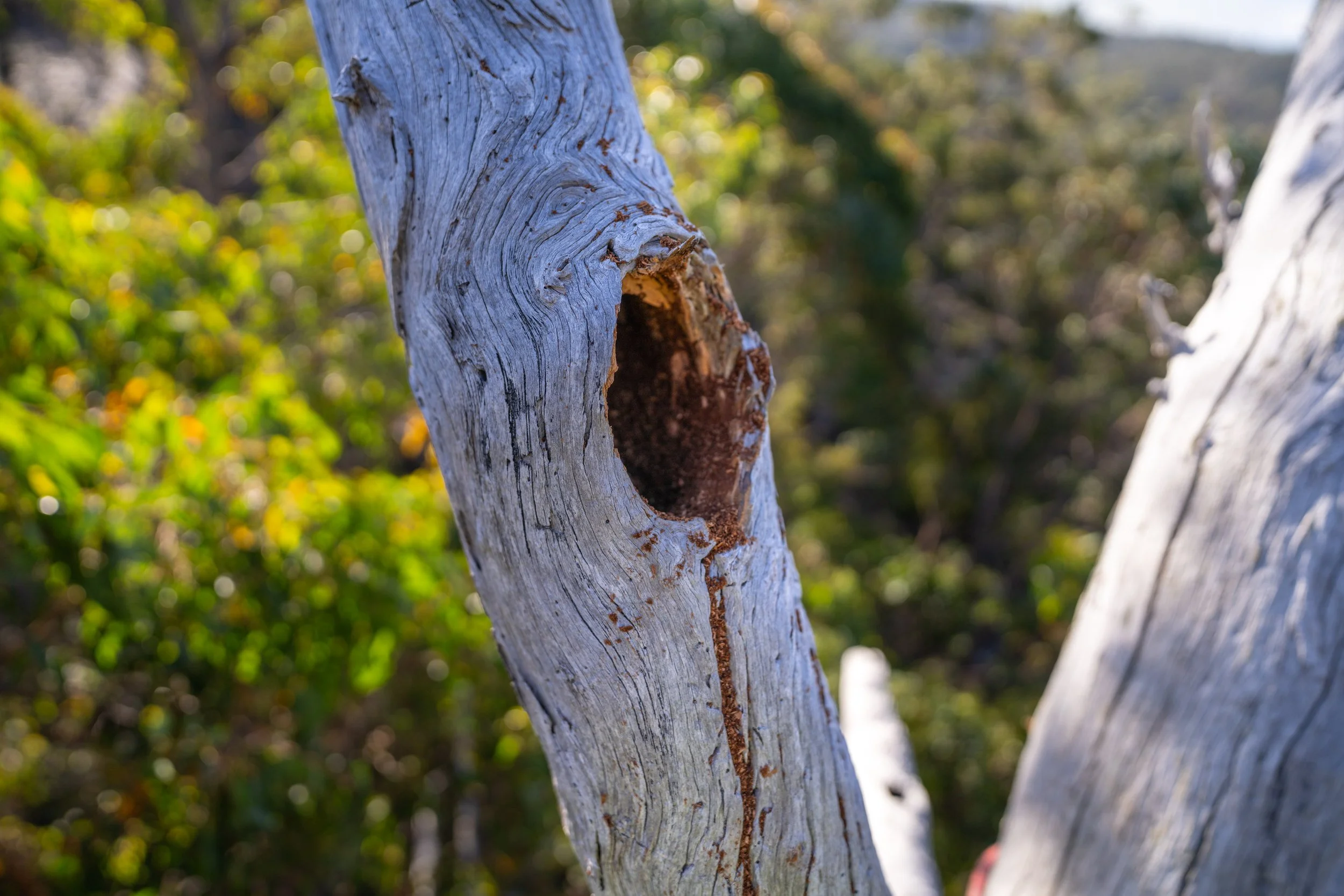
In some circumstances, a tree that would otherwise be completely removed may be suitable for partial retention.
For example, a dead or declining tree may have a crown or branches that present unacceptable risks, while part of the trunk could potentially be retained as a habitat structure.
Following an appropriate assessment of the tree and site, management options may include:
Reducing a tree to retain a standing habitat stem.
Creating artificial hollows in suitable retained timber.
Retaining selected deadwood and other habitat features.
Incorporating natural fracture-style pruning or other specialist features.
Managing the remaining structure with consideration for its future condition and surrounding use.
Not every tree or property is suitable for habitat retention. The available options depend on structural condition, location, foreseeable risks and applicable approvals.
Where practical, we aim to explore solutions that balance site safety and management needs with habitat conservation.
Turning Tree Management Into Habitat Opportunities
Habitat creation can be considered for individual trees, larger properties and broader ecological management programs.
Our specialist arboricultural services may be suitable for:
Private landowners wanting to improve wildlife habitat.
Councils and public land managers.
Bushland and reserve management projects.
Environmental restoration programs.
Ecologists and environmental consultants.
Developers implementing approved ecological management requirements.
For projects with specific conservation objectives, we can work alongside ecologists and other relevant professionals to undertake the practical tree-climbing and habitat creation components.
Where ecological reports, target species requirements or management plans are available, these can help guide the proposed work.
Habitat Creation for Landowners & Environmental Projects
Frequently Asked Questions
-
An artificial tree hollow is a cavity deliberately created or installed to provide a potential shelter, nesting or roosting site for wildlife.
Carved hollows can be created within suitable living or dead trees using specialist equipment such as the Hollow Hog.
-
Different birds, mammals and other animals use different types of cavities.
The suitability of a hollow depends on factors including its entrance dimensions, internal space, height, location and the surrounding habitat.
Artificial hollows can be designed with particular wildlife in mind, although their use by the intended species cannot be guaranteed.
-
Short answer - yes.
However, not every living tree is a suitable candidate. The species, condition, size and structure of the host tree need to be considered, along with the proposed cavity design.
Carving a hollow creates a wound and removes wood from the tree, so the potential implications for its health and structural integrity are important.
-
In some circumstances.
A dead tree may be suitable for reduction and retention as a habitat stem, provided its condition, location and the surrounding site allow an acceptable management approach.
Where retention is not suitable, other habitat creation options may be considered.
-
Both techniques have potential benefits and limitations.
Carved hollows may offer different thermal and structural characteristics from conventional nest boxes, but their suitability depends on the application.
Current research continues to investigate cavity performance, wildlife occupancy, durability and effects on host trees.
Protecting existing natural hollows remains especially important.
Based in southern Hobart, we undertake specialist habitat creation and ecological arboricultural projects throughout southern Tasmania, with projects elsewhere in the state considered by arrangement.
Our technical climbing experience allows us to work with suitable habitat trees in locations where conventional ground-based access may be limited.
We welcome enquiries from private landowners, environmental professionals, councils and conservation organisations.
Habitat Creation Across Hobart & Tasmania
Planning a Habitat Creation Project?
Whether you're interested in a single artificial hollow, retaining a dead habitat tree or incorporating habitat features into a larger environmental project, we'd be happy to discuss the options.
If you have an ecological assessment, target species information or an existing habitat management plan, please include this with your enquiry.